Architecture teams carry one of the most important responsibilities in any technology organisation: ensuring that the decisions made today don't become the technical debt of tomorrow. That work matters — and the tools available to do it have fundamentally changed.
The challenge most enterprise architecture teams face is not a lack of expertise or intent. It is that the architecture governance process has not kept pace with delivery. Organisations are running models designed for a slower world — and there is now a better way. cajeX was built to close that gap: giving architecture teams the infrastructure they need to govern at speed, without sacrificing credibility or traceability.
To understand why it matters, it helps to see clearly where traditional approaches fall short — and what fixing them actually looks like.
Three Patterns Worth Addressing
1. Decisions happen before the review
In most organisations, real architecture decisions are made in standups, Slack threads, and informal conversations — long before a formal review takes place. By the time a design reaches the governance queue, the technology choice is made and the team has weeks of work in place. The review confirms rather than shapes.
What cajeX changes: With architecture directives defined upfront, cajeX runs an AI-powered architecture review at project inception — when it costs nothing to adjust course. Teams get clear feedback, through findings against approved standards, before any commitment is made, not after. Governance moves to where it creates the most value: the beginning.
2. Knowledge lives in Directives, not systems or individual persons
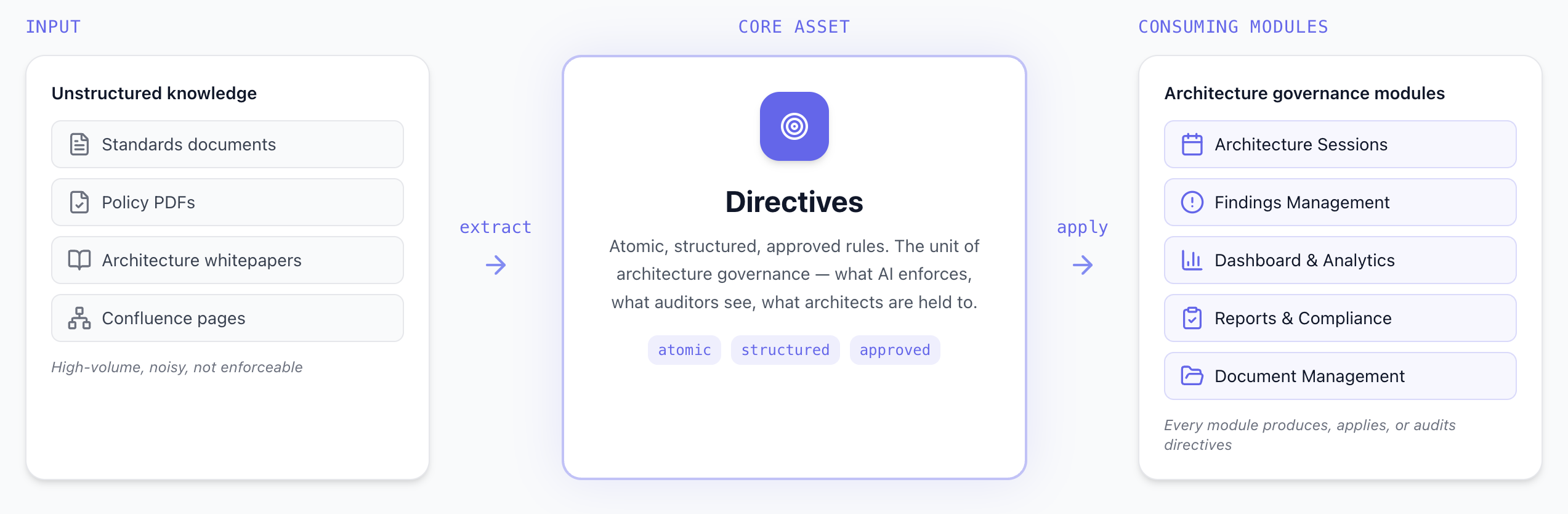
Every organisation has architecture standards. They live in Confluence, SharePoint, PDF attachments, and wiki pages last updated a year ago. The knowledge exists — but it does not travel. Different reviewers interpret the same document differently. Guardrails get negotiated project by project. Compliance becomes inconsistent.
What cajeX changes: cajeX turns those documents into approved architecture directives — single, structured rules with owners and lifecycles. AI reads your existing knowledge base and proposes candidate directives; architects review and approve them. From that point, every session applies the same ruleset consistently. Architecture review automation means the same standards reach every project, regardless of who is available to review.
3. Reviews are inconsistent and hard to trace
Manual reviews scale with headcount. When delivery accelerates, review quality degrades — or reviews get skipped entirely. And when an audit arrives, the question is not just "did you have a process?" but "can you show what was reviewed, what was found, and how it was resolved?" Architecture compliance tracking becomes a scramble.
What cajeX changes: Every cajeX session produces structured findings with severity levels and remediation guidance. Every decision is logged. Every directive applied is traceable. The platform builds the audit trail automatically — so architecture teams can demonstrate architecture compliance tracking at any moment, without assembling evidence after the fact.
Governance as a Democratic Process
The deeper shift cajeX makes possible is making enterprise architecture governance democratic.
In a traditional model, the quality of a review depends entirely on who is in the room — which senior architect was available, how much context they happened to carry, how consistently they interpreted a standard they last read six months ago. Governance is only as good as the individual performing it.
With cajeX, governance becomes a democratic process — the same rules, applied to every project, by every reviewer, every time. A new team member does not need six months of institutional knowledge to run an effective review. The directives carry the standards. The AI-powered architecture review applies them. The findings are consistent.
This is what makes the model scale: not more architects, but a better tool.
Built for the Speed You're Already Moving At
The organisations getting the most from cajeX are not the ones with the biggest architecture teams. They are the ones who decided to stop scaling governance through headcount and start treating the architecture governance process as a product.
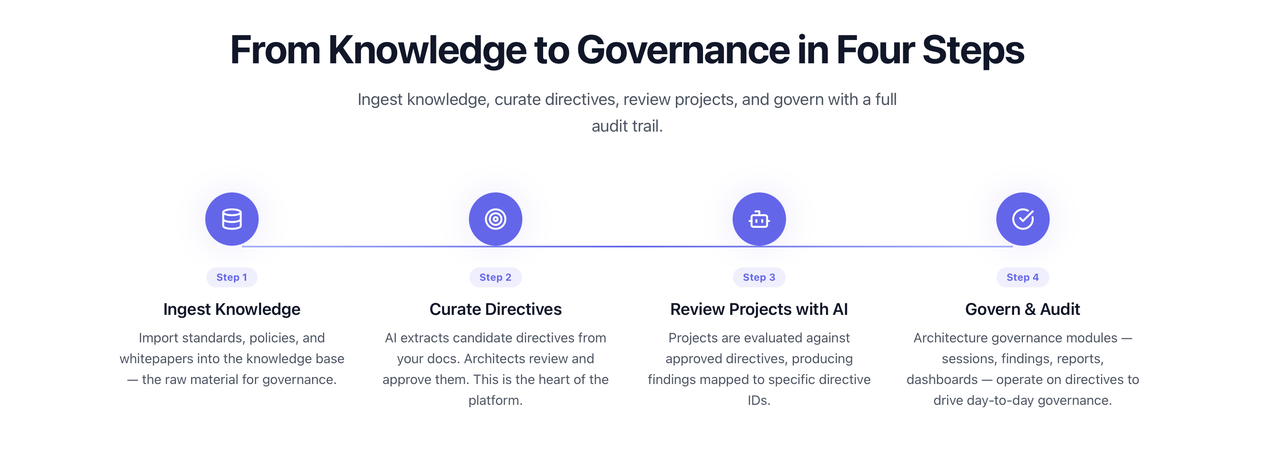
Standards and policies enter the system as knowledge. AI extracts candidate directives. Architects approve them. From that point, every project review applies the full directive set — automatically, consistently, with a complete audit trail. The architecture team focuses on judgment calls: the edge cases, the strategic trade-offs, the decisions that genuinely need experience. The platform handles the rest.
That decision changes everything: review consistency, time-to-finding, architecture compliance tracking, and the relationship between architecture and delivery.
If your team is ready to make that shift, cajeX is built for exactly that moment.
▶ See it in action on the cajeX YouTube channel
Start free — see how cajeX approaches governance differently. cajex.ai/signup